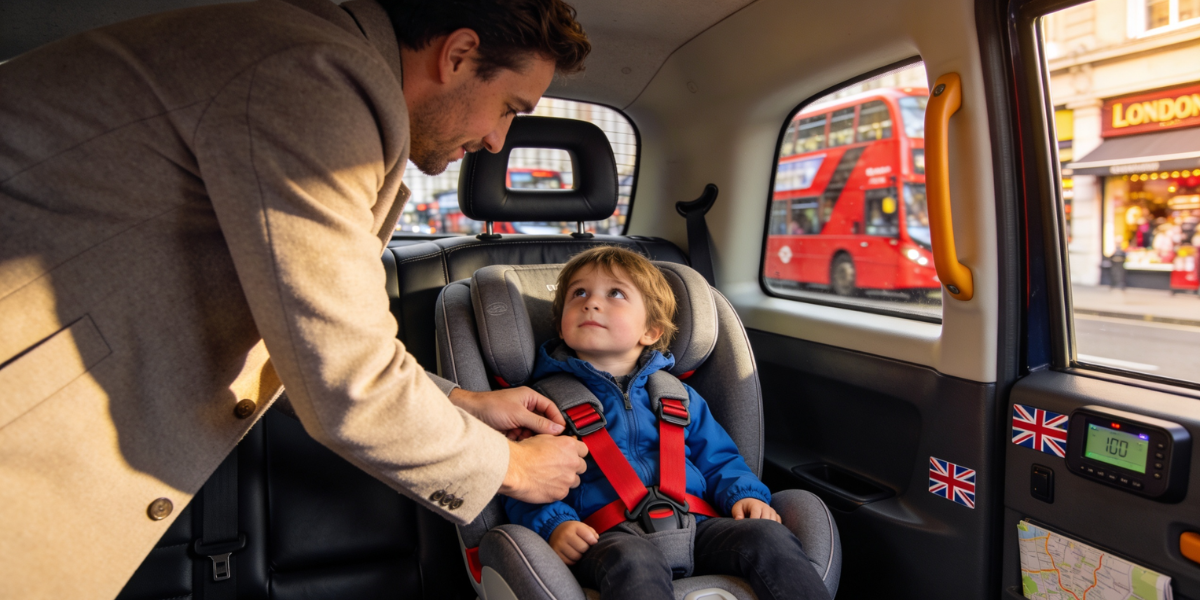
Travelling by taxi with a child often raises a practical question that appears simple on the surface but carries a lot of uncertainty once planning begins. UK rules on child seating are not identical across all vehicle types, and taxis follow a slightly different set of allowances that can easily cause confusion.
Short city rides, airport transfers, and unplanned journeys all add to that uncertainty about what is legally required and what is simply recommended for safety. A clear understanding of these rules helps remove the guesswork and makes taxi travel with children far more straightforward.
Understanding the Car Seat Requirements in the UK
The UK government states that children usually need to use a child car seat until they are 12 years old or 135cm tall, whichever comes first. These rules apply to most vehicles, including private cars. Taxis and private hire vehicles, however, follow slightly different legal guidance in certain situations.
For licensed taxis and minicabs, children can sometimes travel without a child car seat if one is unavailable. The rules depend on the child’s age, where they sit in the vehicle, and the type of taxi being used. While the law allows exemptions in some cases, safety experts still encourage the use of an appropriate child seat whenever possible. This is especially important for longer journeys and motorway travel.
The official guidance on the car seat requirement also explains that rear seats are generally the safer option for children travelling in taxis without a child seat. Front seat travel without a proper restraint is restricted for younger children under UK law.
What the Law States on Child Car Seats and Booster Seats
A common question among travellers is do I need a car seat in a taxi, especially when arranging short or unexpected journeys with children. UK regulations set out precise conditions for child restraints across different situations. These rules focus on protecting young passengers based on their size and developmental stage while allowing some flexibility for certain transport types, including taxis.
1. Children Under Three Years Old in Taxis
Children under the age of three can travel in a licensed taxi or private hire vehicle without a child car seat if one is not available. However, they must sit in the rear seat of the vehicle. UK law does not allow a child under three to travel in the front seat without an approved child restraint.
This exemption exists because taxis are often booked at short notice, and carrying spare seats for every age group is not practical for drivers. Even so, many parents still prefer arranging a suitable seat in advance for extra peace of mind during the journey.
2. Rules for Children Aged Three and Above
Children aged three or older can legally travel in the rear seat of a taxi without a child car seat if no suitable seat is available. In this situation, they must wear an adult seat belt.
The law allows this exemption only for licensed taxis and private hire vehicles. It does not automatically apply to regular private cars. Although legal, relying solely on an adult seat belt may not provide the same level of protection as a properly fitted child restraint.
3. Front Seat Restrictions
The front passenger seat comes with stricter rules for children. A child under three years old cannot sit in the front without an approved child seat. Older children travelling in the front also need the correct child restraint if required for their size and age.
This part of the law is often overlooked during short taxi rides. Drivers and passengers alike should be aware of seating arrangements before the journey begins.
4. Booster Seats and Older Children
Booster seats are designed for children who have outgrown smaller child seats but still need help achieving the correct seat belt position. The adult belt should sit comfortably across the chest and hips rather than the neck or stomach.
In taxis, booster seats are not always available unless requested in advance. Families travelling longer distances often choose pre-booked services that include child seating options as part of the booking process.
5. Licensed Taxis and Private Hire Vehicles
The exemption rules apply specifically to licensed taxis and private hire vehicles operating legally under UK regulations. Unlicensed transport services do not fall under the same guidance.
This distinction matters because licensed taxi operators must meet vehicle safety standards and driver licensing requirements. Booking through a recognised company gives greater confidence regarding compliance with transport laws and passenger safety.
Why Many Parents Still Prefer Child Seats in Taxis
Even where UK law allows exemptions, child safety specialists continue to recommend the use of suitable child restraints during taxi travel. Properly fitted seats are designed to protect children during sudden braking, sharp turns, and collisions.
Adult seat belts do not fit smaller children correctly, which is why questions around do you need a car seat in a taxi in the UK often point to real safety concerns rather than just legal requirements. A loose or poorly positioned belt can increase the risk of injury in an accident. Child seats and booster seats help position the belt safely across stronger parts of the body.
Taxi journeys can also involve high-speed roads, busy traffic, and longer distances than first expected. For this reason, many families feel more comfortable arranging a child seat ahead of time, particularly for airport transfers. For families who want that reassurance built into their booking, Corker offers a trusted Stansted Airport taxi service with child-friendly travel arrangements and comfortable, well-maintained vehicles.
Best Practices for Booking a Taxi with Child Seating
A little planning in advance makes booking a taxi with a child seat far more straightforward. Here are some practical tips to help make the process smoother for family travel.
- Booking in advance allows taxi operators to prepare the correct child seat type, reducing delays and avoiding last-minute complications.
- Providing accurate details such as the child’s age and height helps ensure the right seating option is ready for a safer, more comfortable journey.
- Infant carriers, toddler seats, and booster seats serve different purposes, so selecting the correct category improves both safety and comfort.
- Airport journeys often involve additional logistics such as luggage and pushchairs, making pre-organised taxi services a more practical choice for families.
- Choosing operators experienced in family transport helps the whole process run more smoothly, especially when coordinating multiple travel requirements at once.
Final Thoughts
The legal position regarding taxis and child seats in the UK becomes much easier to understand once the exemptions are clearly broken down. The car seat requirements in the UK generally state that children should use an appropriate child restraint, but licensed taxis and private hire vehicles can operate under specific exemptions when a seat is unavailable.
Safety experts still recommend using appropriate child seats wherever possible, particularly for longer trips and airport transfers. Planning ahead provides greater comfort and reassurance for everyone travelling with young children.For reliable family travel, Corker provides professional transport designed with comfort and convenience in mind. Families looking for a cab with infant car seat can book ahead with Corker for a smooth, well-organised journey across Hertfordshire, Bedfordshire, and beyond.