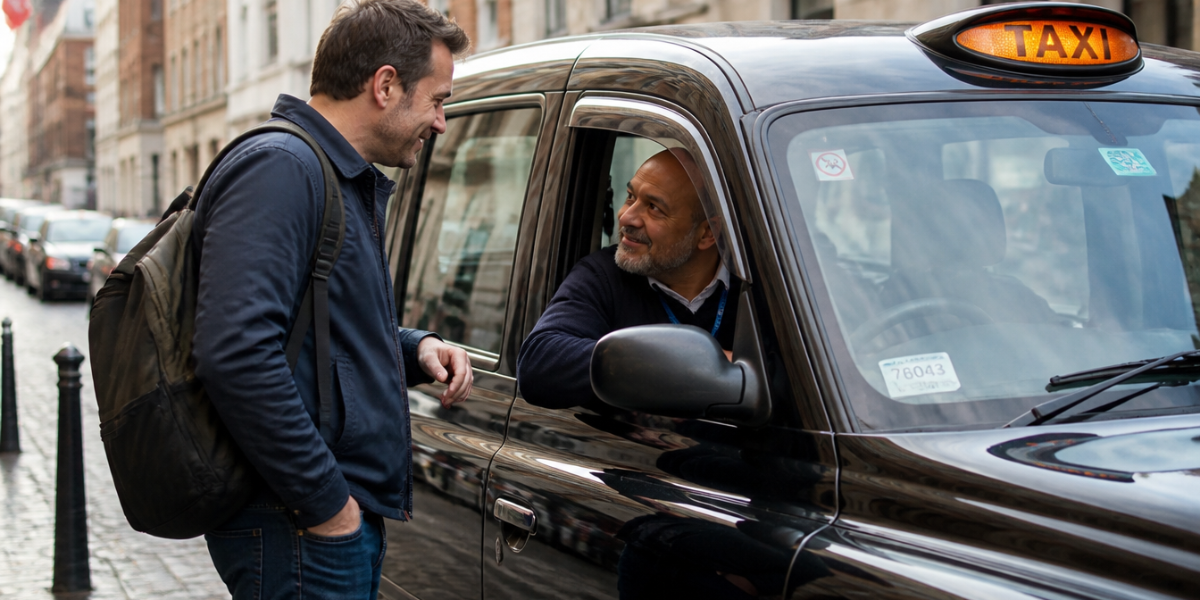
Most taxi journeys go exactly as expected. You book, the driver arrives, and you get to where you’re going without a second thought. But every so often, a driver says no, and suddenly a straightforward trip across St Albans or a late-night pickup in Harpenden turns into a confusing standoff on the pavement. Knowing exactly where you stand in that moment isn’t just useful; it’s the difference between calmly asserting your rights and being talked out of a journey you’re perfectly entitled to take. The rules sit in a mix of licensing law, common sense and a handful of genuine safety exceptions, and once you know them, no driver can catch you off guard.
Can Taxi Drivers Refuse Passengers?
The short answer is yes, but only in specific circumstances. UK taxi licensing law places a duty on drivers to accept fares within their licensed area, known as the controlled district, unless they have what the law calls a “reasonable excuse.” That phrase isn’t spelt out in exhaustive detail in legislation, so in practice it’s been shaped by court decisions and local licensing policy over the years. So while the honest answer to whether taxi drivers can refuse passengers is yes in narrow circumstances, the everyday reality is that most refusals passengers encounter don’t actually meet that bar.
Under Section 53 of the Town Police Clauses Act 1847, a driver who refuses a hire without reasonable excuse can be liable for a fine. This rule exists because taxi licences are granted on the understanding that drivers will provide a genuine public service, not pick and choose fares as they please.
Can a Taxi Driver Refuse a Fare in the UK?
There are a handful of situations where refusal is lawful, and understanding them helps clear up a lot of confusion. A driver can decline a booking if the destination falls outside their licensed operating area, since there’s no statutory duty to accept a fare that takes them beyond it. A driver can also refuse if a passenger is behaving in a threatening or abusive way, or if there are genuine safety concerns about the journey itself. Cost or convenience, on the other hand, isn’t a valid reason. Refusing a fare simply because the distance is too short does not meet the reasonable excuse test, and neither does refusing because a passenger has had a drink. Whenever passengers across the country ask, can a taxi driver refuse a fare, UK law always points back to that same reasonable excuse test.
Is It Illegal to Refuse a Taxi Fare?
Yes, and this is where a lot of passengers are surprised. If a driver turns down a fare within their controlled district and doesn’t have a reasonable excuse, they’re committing an offence under licensing law and can be reported to the local council. Councils take these complaints seriously because the whole taxi licensing system depends on drivers honouring the terms of their licence.
There’s an important exception written into the Equality Act 2010, though. Drivers cannot refuse a passenger because of a protected characteristic such as disability, race, religion or sexual orientation. This includes wheelchair users, who must be carried at the same fare as any other passenger, and passengers with an officially accredited assistance dog, who cannot be turned away unless the driver holds a specific medical exemption. Refusing a fare on these grounds isn’t just a licensing breach; it’s discrimination, and it can be pursued through separate legal routes as well. So, to directly answer whether it is illegal to refuse a taxi fare without a lawful reason, the answer is a firm yes, and passengers have every right to push back.
Genuine Reasons Taxi Drivers Can Refuse Rides
Knowing the genuine reasons taxi drivers can refuse rides helps to break this down clearly, since the rules aren’t always intuitive.
Journeys Outside the Licensed Area
If a trip would take a driver beyond the boundary of the authority that licensed them, they’re within their rights to say no, because there’s no legal obligation to accept bookings outside that zone.
Threatening or Abusive Behaviour
Driver safety matters too. If a passenger is aggressive, threatening or clearly a risk, a refusal on these grounds is almost always treated as reasonable.
Inability to Pay
If a passenger can’t show they have the means to cover the fare, a driver can decline the booking before the journey starts.
Vehicle Capacity or Safety Limits
Drivers aren’t required to carry more passengers than their vehicle is licensed for, and safety limits around luggage or seating are a valid reason to turn down a booking.
Off Duty or Pre-Booked
A driver whose light is off, or who is already committed to another booking, isn’t refusing a fare in the legal sense. They simply aren’t available.
Once you’ve seen each of these laid out individually, the table below summarises the difference between lawful and unlawful refusals at a glance.
| Reasons for Refusals | Is It Lawful? |
| Journey ends outside the licensed area | Yes |
| Passenger is abusive or threatening | Yes |
| Passenger cannot show proof of payment | Yes |
| Short journey or low fare | No |
| Passenger has a disability or uses a wheelchair | No |
| Passenger has an accredited assistance dog | No |
| Passenger’s race, religion or sexual orientation | No, and this is discrimination |
What Should You Do If You’re Refused a Ride?
If you’re left asking, can a taxi driver refuse to take you after a bad experience, the first step is simply to note the details. Take down the vehicle’s licence plate number, the time and location, and the badge number if it’s visible. Most councils allow you to submit a complaint online through their licensing department, and these are followed up individually rather than dismissed. If the refusal appears to relate to a disability, a service animal or any other protected characteristic, it’s worth flagging that explicitly, since it opens up additional avenues for a response.
The simplest way to avoid asking if a taxi driver can refuse to take you in the first place is to remove the ambiguity before it starts. Travelling with little ones? Book a cab with an infant car seat with Corker, where your pickup, destination and seating needs are all agreed and confirmed before the driver ever arrives, so there’s no room for confusion on the day.
A System Built on Fair Access
Taxi licensing exists to strike a balance. Drivers need the ability to protect themselves and decline genuinely unsafe situations, while passengers across towns like Hatfield, Redbourn, Flamstead, London Colney and Colney Heath need confidence that a licensed taxi will actually take them where they need to go. Understanding where that line sits helps you know your rights, on a routine trip or something a little more time-sensitive.
In Conclusion
Most of the time, none of this comes up at all. Drivers accept the vast majority of fares without issue, and the rules around refusal exist mainly to cover a small number of genuine edge cases rather than everyday journeys. Still, knowing your rights beforehand means you’ll never be caught unprepared, and it puts you back in control of a situation that can otherwise feel frustrating and confusing. The best way to sidestep the whole issue is to book with an operator who removes the guesswork from the start.
Ready to travel without the uncertainty? Book your airport transfer to St Albans with Corker today. Our team pre-agrees your route and pickup details in advance, so there’s nothing left to negotiate on the day, and you can travel with total confidence from the moment you book.